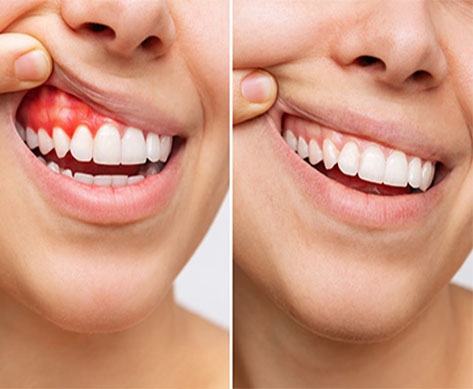
Gum disease, from mild gingivitis to severe periodontitis, poses risks like tooth loss if untreated. Treatments vary based on its stage. Early gingivitis responds well to professional cleanings and improved oral care at home. Regular cleanings remove plaque and tartar, while daily brushing, flossing, and using mouthwash help prevent its return.
Advanced periodontitis requires scaling and root planing, a deeper cleaning. This procedure removes plaque from below and above the gumline and smooths tooth roots to aid gum reattachment, reduce pocket depth, and halt disease progression. Severe cases may need flap surgery to lift gums, clean deep pockets, and suture them tightly around teeth for better fit and reduced pockets. Bone and tissue grafts promote bone and gum tissue growth, while laser therapy removes diseased tissue and bacteria with minimal invasiveness, less discomfort, and faster healing.
Maintaining oral hygiene is crucial post-treatment. Brushing with fluoride toothpaste, daily flossing, using mouthwash, and regular dental check-ups are vital to monitor oral health and detect early signs of gum disease. Lifestyle changes like quitting smoking, managing diabetes, and a healthy diet complement treatment effectiveness, ensuring long-term gum health and a confident smile. Prompt consultation with a dentist is advised if gum disease is suspected to determine the best treatment plan.


